AlxUS Dj


We are NOT budget nor cheap but we are affordable!
Note: Use of a Desktop is recommended
Speaker Wattage & Room Size – How Many Watts Per Square Foot
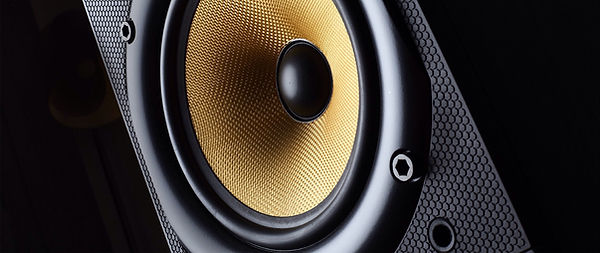
Ready to find out how many watts should your speakers have and boost your room sound? Awesome!
In this new guide you’ll learn everything there is to know about watts you need for your speakers, including:
-
How to calculate the watts you need for a party
-
Average wattage by the size of the room
-
How do watts relate to speakers
-
How does wattage relate to how apart should the speakers be
-
Why doubling the wattage won’t double the volume
Most PA speakers range from 100 watts to 2000 watts peak. The advantage of greater wattage is the potential volume boost and better tone quality and coverage at lower volumes.
Less than 500 square feet will be covered with a pair of 100-watt speakers. For 500 to 1000 square feet, look for 300 to 500-watt speakers. 1000 to 2000 square feet will be covered with two 500 to 700-watt speakers and a subwoofer of 1000 watts. To cover over 2000 square feet use two tops of 1200-watt and a 2800-watt subwoofer.
When you’re looking for the wattage of speakers and subwoofers, you will often find two numbers for the power handling rating: RMS (root mean square), and “peak.”
Mean power, or root mean square (RMS) power handling, refers to how much continuous power the speaker can work. The peak power handling rate refers to the highest power level that the speaker can use in short bursts.
For example, a speaker with a 50W RMS rating but a peak rating of 100W means that the speaker can easily run with 50 watts of continuous power, with occasional bursts of up to 100W.
The answer to the question “How many watts is a good speaker?” depends on the size of your house or venue. A good speaker for a small house party can have 50 watts if the dance floor is tiny. In contrast, if you’re a host to a party for 200-300 people, you can hardly get away with less than 1500 watts.
Average Wattage by the Size of the Room
This is the average wattage you’ll need. It includes the wattage sum for speakers and subwoofer
Room size in square feetWattage sum (peak)Recommended speaker
Under 500 20 – 100watts Bose SoundLink Color II
500-1000 100 – 500watts Kanto YU4
1000-2000 500 – 2000watts Electro-Voice ZLX-12BT 12″
Over 2000 2000 – 4000watts Rockville Titan 15″(2x)
Under 500 square feet
Here you don’t need an extra subwoofer. It’s probably an indoor house party with less than 20 people attending so you can live without it.
This beautiful Bose SoundLink Color II will be more than enough for your needs.
It’s compact, includes a subwoofer, and has a Bluetooth connection, so you don’t have to mess around with cables.
500 – 1000 square feet
This is probably a decent-sized living room or even a whole apartment, and you’ll probably pack 30-40 people there.
You could go with a fantastic Kanto YU4 (it’s on a huge discount on Amazon in July), which is also a cheap option for the quality you get with it and will serve you if you’re going to need it for a bigger house.
This one will more likely bring the police than chase all the people out of the room with poor sound.
If you want something more classy, Abramtek E500 (also on a discount on Amazon) is for you. The Abramtek provides enough bass and has a bass boost button. It’s also for sharp listening and has a 5-band customizable EQ, and 4 other EQ presets.
It puts out 200 watts of continuous power and has two separate amplifiers (50 watts of the 200 watts apply to the subwoofer). Doesn’t sound like much, but it can reach a tremendous >100+ Db.
1000 – 2000 square feet
If you’re looking for a simple sound system with good bass for throwing parties at your house and not expecting too many people (140 tops), you’ll be fine with two 700-watt speakers and a subwoofer.
My friend DJs college parties every week, and his current setup contains two Electro-Voice ZLX-12BT 12″.
It’s more than enough for a rooftop full of 100 drunk students. Something like that should also do it for you.
The only other tip I have is – when stepping up to full-sized speakers, make sure you have high-quality audio files.
Over 2000 square feet
The Yorkville Sound Paraline series are foolishly great speakers. The most vital reason I use them is how effective they are. When you only have 1000watts of electrical power, you want to choose your speakers thoughtfully.
I normally get two speakers, which are the Rockville Titan 15″ with the subwoofer. I did a lot of digging, and these seemed to be the most sound for the least amount of power. They still sound amazing at deafening volumes as well.
We regularly get about 250-350 people, and those tops are loud enough for a crowd that size.
I find that in the summer, we don’t require nearly as many watts of speaker power to get the music to sound great. In the wintertime, you need about double to get the same kind of effect because the snow consumes a lot of the sound.
Generally, I use two generators, I have a 1000watt one for the lights and DJ booth, and a 2000watt one for the sound system. This is usually overkill, and I’ve even run the whole setup on a single 1000watt generator, but we were risking blowing a breaking constantly.
How many watts is average for a good speaker? Here’s the research we conducted on wattage for solid outdoor, computer speakers, party speakers, etc.
How to Calculate the Watts You Need for a Party?
1. Number of guests
This is an old-school method we use if we’re organizing an outdoor party with no space limit (e.g., woods, beach, large private property).
2. Size of the venue (The most important)
This is what most of us care about most. If you’re organizing a house party (basement, rooftop, apartment), you want to know the square feet and how the walls are set up to get as better as possible acoustic surround.
3. Is it indoors or outdoors
If it’s outdoors, we usually double the wattage even though it’s the same number of guests in question because of the wind or anything that could interfere with the sound. Outdoors you should go for 10 watts per guest minimum.
How Does Wattage Relate to Speakers?
A watt (W) is a measure of energy called after James Watt (the man who began the practical steam engine). In the DJing world, we use watts to measure the power-handling capacities of audio devices’ power-output ability.
You’ll find two universal values for power handling.
The RMS (root mean square) value points to how much continuous power the audio device can handle.
The peak value relates to the maximum power level that the speaker can manage in short bursts.
If you have a speaker valued at 75 watts RMS and 160 watts peak, it can manage 75 watts of continuous power, with rare peaks of up to 150 watts.
It would help if you also were careful of comparing the wattages of two separate powered speakers. Why is that? RMS values refer to continuous, real-world usage. They’re better than peak values at measuring a speaker’s performance.
Sadly, some companies market their gear using only peak values, because the larger numbers look more impressive. So be sure to have this in mind when comparing speakers. That 1000-watt sub may not be a 1000-watt RMS-capable subwoofer, and thus, you may not be making an apples-to-apples comparison.
Are watts even that important for speakers!? Well, not as much. Here’s why watts don’t matter that much in speakers and what are the main factors when choosing the best one.
How Does Wattage Relate to How Apart Should the Speakers Be?
The average ratio for the sound performance range is based upon the audio devices’ SPL (sound pressure level) compared to the typical ambient background sound.
The general rule of thumb is that a 200-watt speaker will cover a 60-foot range. I recommend testing with the speaker position to find out where and how far apart they must be for the best performance.
Why Doubling the Wattage Won’t Double the Volume?
Sound pressure level (SPL) declared in decibels (dB) represents how much louder or quieter one sound is compared to another.
Because decibels are logarithmic, you can’t just double the number to get something twice as loud. For example, 60dB SPL isn’t twice as loud as 30dB SPL.
So, duplicating the power (wattage) effects in a +3dB increase. A notable volume increase, but not the double.
The doubling of volume requires adding +10dB.
Why Wattage Doesn’t Even Mean More Volume?
Contrary to popular belief, it would be best if you never expected that more wattage corresponds to more volume when analyzing two speakers.
While wattage is an important factor when you’re picking speakers, sensitivity is even more decisive.
Sensitivity, shown in decibels, is a measurement of a speaker’s ability to turn power into sound efficiently.
It defines the SPL that a speaker can give from a 1-watt signal at a range of 1 meter.
It’s a meaningful sign of a speaker’s overall loudness and one of the reasons why a 2,000-watt speaker isn’t necessarily more powerful than a 1000-watt one.
A 1000-watt speaker with a sensitivity of 96dB will be the same volume as a 2,000-watt speaker with a sensitivity of 93dB.
How loud are speakers by wattage on average? In the linked article, we compared the average wattage of speakers and loudness.
Active or Passive Speakers? Which One to Choose?
Passive (non-powered) speakers don’t have power amps.
When we speak about the wattage rating of a passive speaker, we refer to its power-handling capability.
If you’re building an extensive, complex sound system, passive speakers are great. Because of the immense power these systems require, having separate amplifiers and speakers allows custom designs to be tailored to the venue’s needs.
An unencumbered passage to the amplifier ensures simple support (climbing walls and soaring rafters every time you want to make an amplifier change is not fun).
Active (powered) speakers have built-in amplifiers that are precisely suited to the speakers. This is excellent for you since you won’t have to worry about matching your speakers with the correct amp — it’s already been solved for you. And they’re a breeze to work with. Setup is as simple as plugging your speaker into an electrical plug and connecting your other devices to the speaker.
Here’s our more in-depth article about the differences between active and passive speakers and recommendations.
All in all, go for active speakers as opposed to passive ones. If you’re a beginner, it makes the entire task of setting up much more straightforward. Otherwise, you may find yourself dealing with amps, wattage and ohm loads, and more other stuff.
That’s what I said to my cousin in Australia since I don’t have time to explain every bit of the equipment. Eventually, he decided on these:
2x Speakers: Electro-Voice ZLX12P 12″ 2-Way 1000W
1x Sub: Klipsch R-120SW subwoofer
I also highly advise getting a crossover; it divides the low-end frequencies from the high-end ones. This indicates the subs and speakers only get the frequency range they were intended to play. It makes the speakers much more productive, which means they sound much louder without attaching more speakers, and the speaker cones are less prone to breaking.
Ensure you get all of the right cables too.
source: https://startingtodj.com/speaker-wattage/
How Many Watts Is Good for Speakers?
Are you curious to discover what wattage is typical for different high-quality speakers and fill your surroundings with sound? Great!
In this article, you’ll learn everything there is to know about watts you need for your speakers, including:
-
Average wattage by the type of good speakers
-
How do we know what a good speaker is
-
Does higher wattage means better speakers
-
How wattage relates to volume
Most good speakers range from 10 watts to 1000 watts peak. The benefit of greater wattage is the possible volume boost and more solid tone quality and coverage at lower volumes.
Good outdoor speakers will usually have around 80 watts. For computer speakers, look for 10 to 25 watts. Party speakers will have around 250W, and high-quality Bluetooth speakers will most likely be between 40 to 60 watts. A solid soundbar will have about 150 watts, boat speakers will have around 200W, and PA speakers 600W.
If you’re looking for the wattage of speakers and subwoofers, you will usually find two numbers for the power handling number: RMS (root mean square) and “peak.”
Mean power, or root mean square (RMS) power handling, points to how much continuous power the unit can run. The peak power handling rate relates to the highest power level that the speaker can handle in short bursts.
For instance, a speaker with a 40W RMS number but a peak rating of 80W indicates that the speaker can efficiently run with 40 watts of continuous power, with sporadic bursts of up to 80W.
Average Wattage in Good Speakers
This is the average wattage in different types of good speakers. It covers the wattage sum if more than one speaker is in a setup (e.g., computer speakers).
Type of speakerWattage sum (peak)Recommended speaker
Outdoor speakers 80 watts W-KING 80W
Computer speakers 10 – 25 wattsKlipsch ProMedia
Party speakers 240 watts JBL PartyBox 200
Bluetooth speakers 40 – 60 wattsW-KING 50W
Soundbar 150 watts Bestisan 150w
PA speakers 600 watts Rockville BPA12
Outdoor speakers
The best outdoor speakers have to resist the elements and produce strong bass, sound treble, and full midrange with sufficient power to be heard over both the wind and the noise of a crowd. They’re usually around 40 – 100 watts.
I placed a pair of 100W Atrium 6 hanging off a Sonos Amp on my backyard remodeling and added an Atrium Sub100 with a SWA500. It sounded marvelous and has been running great for nearly three years, but it broke suddenly.
Now I have 80W Atrium 4s (link to Amazon) that are tiny enough not to dominate my landscape and large enough to deliver full sound. While they don’t produce much bass, they produce more low end than other outdoor Bluetooth speakers of similar size – worth every cent for hanging outside, backyard barbeques, hot tub, etc.
Computer speakers
I have been using Bose speakers for years. I have Companion 2 Series III (around 22W wattage sum), and it’s one of the best purchases I’ve made during my lifetime.
I bought a second pair and bought a Y splitter and four speakers connected to my computer via the headphone jack. I can turn the volume up, and it feels like we’re in a club. Or play some soothing jazz or 90’s hits at low decibels and enjoy the surround sound and excellent acoustics.
Their customer assistance is good as well. My son ended up breaking one of the speaker cones. I reached customer support to explain my repair possibilities. They just gave me a replacement speaker free of charge.
Party speakers
240-watt JBL Partybox 200, (Amazon link) without doubt, the best value per money party speaker on the market.
My friend bought this one last year, and because of Bluetooth, he takes it to parks when we go drinking with the crew. He pulls it up at his backyard and indoor parties and also has it as hand luggage when traveling by plane.
He thought about buying 2xMotion Boom (Paired in TWS), which has perfect bass and reach, but JBLs now seems like a much better choice!
Check out our article that’s specifically on how many watts per square foot do you actually need.
Does Higher Wattage Mean Better Speakers?
Wattage has very little to do with speaker quality – especially these days when the wattage number listed by the speaker companies are essentially straight-up lies to convince uneducated buyers that the higher the listed wattage, the better the speaker.
While the number of watts doesn’t indicate the sound quality or possible lifespan of a speaker, it shouldn’t be overlooked, and it can come in handy when you’re looking to buy a suitable amplifier.
Do watts matter in speakers? Find out in the linked article.
The number of watts only indicates how much power a speaker can be forced with under certain conditions before it breaks.
Let’s take a 50-watt speaker, for example. This means that it can handle, or rather, process 50 watts of power. In practice, this means that a 50W speaker can often take more than 50 watts.
Efficiency, design, quality of components, and straight-up truthful numbers have more to do with the quality of a speaker than wattage.
So How Do We Know the Speaker Is Good?
The highest-quality speakers recreate sound very precisely. That said, they don’t distort the sound by adjusting it. Ideally, you hear a sound – a saxophone loop, a dialogue, a clap – as it was meant by whoever recorded it. Sadly, no speaker is flawless, but the best ones come incredibly close.
In theory, you can estimate how truly a speaker reproduces sound.
-
Total Harmonic Distortion: TDH measures how accurately speakers interpret what is on a disc or hard drive into sound. The flatter the figure, the less distortion, so lower quantities are better. Usually, rates between 0.05% and 0.08% THD mean a quality “pure” system, but any number below 0.1% THD is excellent.
-
Speaker Impedance: This figure shows you how much current a speaker will draw. Eight ohms is typical. Four ohms is excellent but usually a lot more pricey. If you buy four-ohms speakers, you will need a high-end amplifier to get the most out of them.
-
Headroom: This number is a measure of what speakers can deliver in short bursts. A prominent headroom figure is essential if you have a home cinema system and want to get a surprise from the blasts in action movies.
Every speaker delivers specific frequencies that are louder or softer than others. Believing that your ultimate goal is authentic audio reproduction, the minor variation in loudness between frequencies – in other words, the flatter the frequency response graph is – the greater the speaker quality. In a frequency response graph, you need to see a flat line instead of a line with peaks and valleys.
But sometimes, you cannot define how speakers will sound based purely on the specs. Like I said before, manufacturers are incredibly deceptive. They will provide false specifications about their merchandise, hoping customers will see that their’s has the highest decibel or watts, or whatever. And in actuality, the given specifications are not the best way to decide about any product.
How Does Wattage Relate to Volume (Loudness)?
Your buddy, cousin, acquaintance, or even your mom bragging about their new speakers could sound familiar to you. There are loads of times when I’ve caught them saying: “My new sound system is off the charts bro, it has 500 watts of power!”
This shows that many people believe that more power means more volume, but really, it’s not that simple. Sure, a 1,000-watt sound system is louder than a 20-watt unit but surely not 50 times as loud. As a matter of fact, seldom an 800-watt speaker can provide more volume than a 1,000-watt one.
While power in watts (W) is a measure of electrical power, a decibel (dB) is a measure of loudness.
Even though more wattage doesn’t directly mean more volume, wattage does relate to volume (loudness) through sensitivity. Sensitivity is the amount a speaker can produce with a single watt of power at a 1-meter distance (in a non-reflective, soundproof room), measured in decibels (dB).
The amount of volume generated is termed the sound pressure level or SPL. SPL is given in terms of decibels (dB).
In most cases, the amount will lie somewhere between 84 and 92 dB, with the general rule being: the more sensitive a speaker is, the less power it requires to put out the louder volume.
So, what’s implied if a speaker has a sensitivity of 84 dB SPL?
It means that the sound unit with 1 watt of power measured 1 meter from the speaker can produce a sound pressure level of 84 decibels.
In shorthand, “84 dB SPL 1W/1M”.
And that’s how wattage relates to loudness.
The correlation between watts and decibels
No matter how sensitive your speaker is, there’s a general rule in practice if you want to increase decibel output by enhancing the power of your amplifier.
The rule of thumb is: Increasing speaker sound output by 3 decibels demands you to double the power of the amplifier.
Consider a speaker rated at 84 dB (always recognize that SPL is graded based on 1 W of power and 1 meter from the sound unit).
The practice is that to increase by 3 dB’s, you must double the watts.
To generate an extra 3 dBs to reach 87 dB, the amplifier’s power must expand 2 watts.
But to increase by another 3 dB to 90 dB, the power must double from 2 watts to 4 watts.
And an increase to 93 dB dictates the wattage to double again to 8 watts
SOURCE: https://startingtodj.com/what-is-considered-a-good-speaker-wattage/